

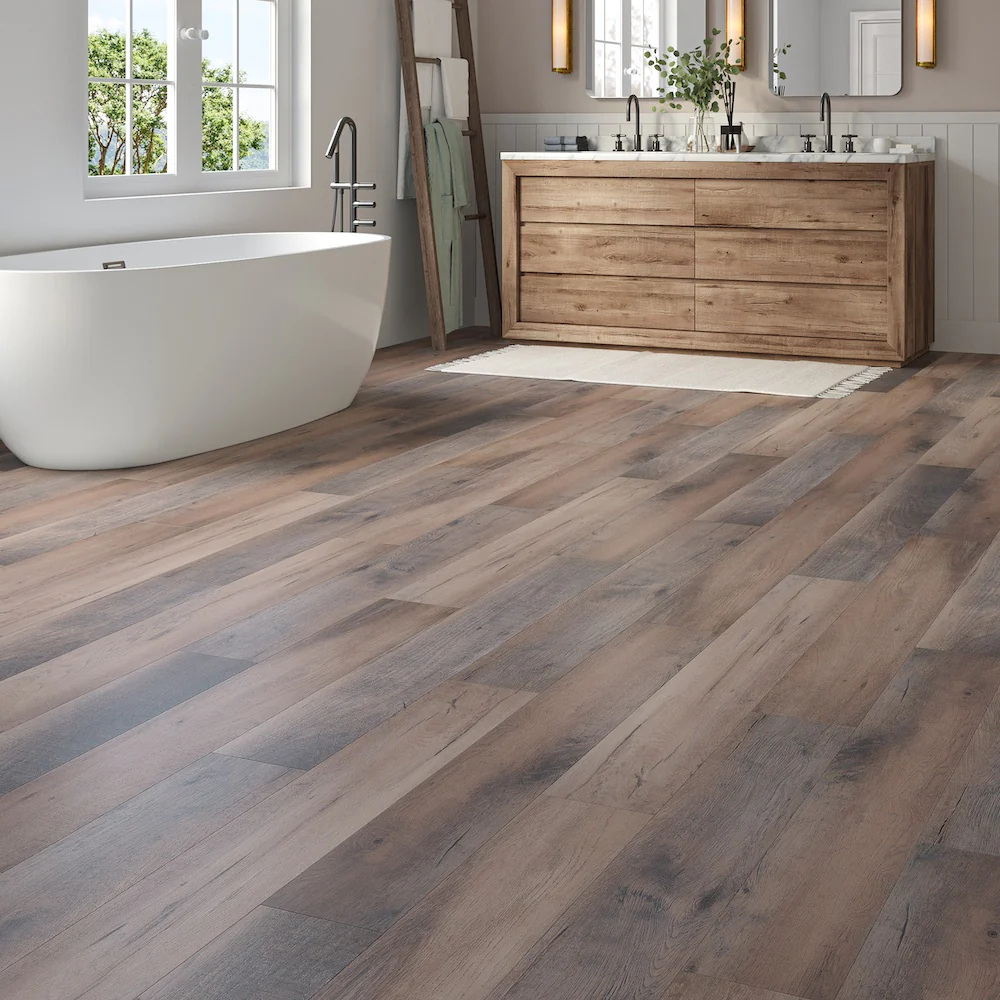
You can install vinyl plank flooring in various spaces, including living rooms, kitchens, bathrooms, and patios. The planks are waterproof, making them resistant to mold and water damage from showers and spills. Vinyl flooring is also durable, warm underfoot, and mimics the look of hardwood while reducing maintenance requirements. Here are a few reasons why vinyl planks work for bathrooms:
Waterproof Material Construction
Luxury vinyl planks (LVP) are waterproof constructions designed to handle splashes, spills, and humidity without swelling or warping. The material has a non-porous surface that doesn’t absorb moisture or stain, leading to improved performance in wet environments. Look for vinyl plank flooring labeled as waterproof rather than water-resistant, especially for installations in full bathrooms with showers and tubs. Waterproof planks prevent moisture penetration through the core and seams, but water-resistant options may only withstand limited exposure.
Choose vinyl planks with rigid cores, reliable edge sealing, and locking systems for improved moisture protection and stability. These aspects influence how well the flooring prevents moisture from seeping between planks, protecting the subfloor from water damage. Prioritize proper subfloor leveling and edge sealing since performance depends on installation quality. The bathroom should also be well-ventilated to support quick drying after use and prevent prolonged exposure to humidity.
Slip-Resistant Surface
Humid bathroom conditions require slip-resistant surfaces that improve traction during use. Vinyl planks are usually textured to provide enhanced slip resistance, even when exposed to moisture. Traction helps stabilize footing on wet floors, and it supports safer movement throughout the bathroom. This makes vinyl flooring safer for bathrooms, where slippery materials struggle to provide the same level of grip.
Low-Maintenance Flooring
Vinyl planks are durable synthetic materials with thick wear layers that minimize scratches and staining. The material usually retains its original finish long-term, especially when protected from harsh chemicals. A non-porous surface also makes it easier to wipe away spills and bath water; stains don’t seep into the flooring.
Sharp objects and heavy furniture may scratch or gouge the surface, but the material is resilient against daily bathroom use. Quick installation involving click-lock systems that fit over the existing flooring also reduces effort during repairs and replacements. Keep your flooring protected from heavy impact and avoid dragging items to prevent scratches.
Remove spills immediately to prevent surface changes caused by prolonged exposure to stains. Quick cleaning reduces the need for chemical agents and aggressive cleaning methods. Regular cleaning helps preserve the floor’s appearance, and it prevents water and debris buildup around seams.
Warm Insulated Surface
Luxury vinyl planks offer enhanced insulation, making them warmer and more comfortable on bare feet than natural stone or tile. A layered construction helps the flooring retain heat, creating a consistent surface temperature. The rigid core adds structural support, and the backing layer works with the underlayment to help reduce heat loss through the floor.
Get Started With Vinyl Plank Flooring
Vinyl is one flooring option available for bathroom installations; others include tiles, hardwood, and laminate. You can find various finish options that blend seamlessly with hardwood flooring in adjacent rooms. High-quality planks and installation services help prevent moisture intrusion. Speak with a contractor today to learn more about vinyl plank flooring for bathroom installations.
- The Importance of Comprehensive Deep Cleaning and Property Restoration
- How Incorporating Zia Tile Collections Transforms Your Living Space
- Emergency Plumber in San Antonio: Essential Qualities to Look for When Hiring
- Plumbing Services: Essential Guide for Choosing a Qualified Plumber in Newport Beach
- How Regular Maintenance by a Plumber Improves Home Plumbing Systems